Conquering Stress with Courage, Clarity, and Confidence

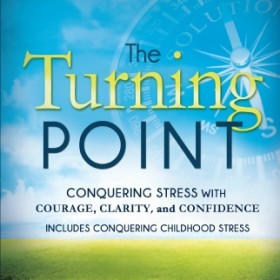
TurningPointCoverToday we are pleased to welcome Drs. Balasa Prasad and Preetham Grandhi to our blog to discuss their new book, The Turning Point: Conquering Stress with Courage, Clarity, and Confidence. Both authors are Psychiatrists who work with patients to conquer their stress so that they can turn their lives around and thrive. Stress has been a principal nemesis of all of us and now stress levels seem to be higher than ever all over the world. A fragile worldwide economy, ongoing globalization and rapid technological advances have all played a part in increasing our stress levels. Let’s turn to Drs. Prasad and Grandhi now to hear their insights about conquering stress.

Mentors: Welcome Dr. Prasad and Dr. Grandhi. Can you begin by telling us how you define stress?

Drs. Prasad & Grandhi: Stress is the emotional discomfort we often feel when things don’t go as planned in our lives or a deep mental anguish triggered by adversity. Stress is the nemesis of three elements we all need – peace of mind, good health, and the spirit of freedom. Whether stress results from day-to day burdens, an addiction, a phobia, conflicts at work or with family, natural disasters, or the seeming impossibility of reaching a life goal, it stands in the way of living a pleasant, productive, secure and meaningful life.

Mentors: You’ve said that The Turning Point is not a book about managing stress – it is a book about eliminating stress from your life for good. Why do we have to conquer stress rather than mange it?

Drs. Prasad & Grandhi: If stress is left unchecked, it can incapacitate and prevent us from reaching our full potential by undermining our courage, clarity and confidence.  Also physically, stress wreaks havoc on the body – people are more prone to developing ulcers, high blood pressure, insomnia, diabetes to name a few.

Managing stress means you allow it to continue to exist and learn only to cope with it when it crops up. Managing uses up time and energy that might be better spent working to reach your goals. Conquering stress means freeing yourself from it forever. Because stress is generated inside us, if we want to conquer it, we have no choice but to defeat it on its own turf and terms.

Mentors: What is the Turning Point program and how does it help conquer stress?

Drs. Prasad & Grandhi: The Turning Point Program is designed to guide a stressed out individual step by step to identify the source and neutralize stress forever.  Individuals usually look at stress from their own and the world’s perspective, and therefore are unable to grasp the dynamics of stress and to conquer it. This book also introduces a new, ground breaking concept called Naturization, which is the missing link in the fight against stress. Naturization provides a third perspective, nature’s perspective, a key and an invaluable tool to conquer stress.

Mentors: Is there a connection between stress and addiction?

Drs. Prasad & Grandhi: Stress and addiction is a match made in hell. At times, stress encourages us to numb ourselves with addictive behaviors. Other times, while seeking a momentary pleasure, thrill, or comfort, we fall into addictive habits, such as compulsive eating, smoking cigarettes or pot, drinking alcohol, snorting cocaine – behaviors that open the door to stress.  Stress and addiction go hand in hand like equal partners in crime.

Mentors: How is stress different in children?

Drs. Prasad & Grandhi: Children are people too therefore they are prone to stress. Unlike adults, however, children do not have the tools or the knowledge to identify the sources of their stress or to express how stress is affecting them or even how to tackle the problem properly. Their abilities to cope with stress independently vary with their developmental ages. The loss of security is the number one source of childhood stress. Children often express their stress by either internalizing it in the form of withdrawal, sadness, and anxieties or externalize it in the form of acting out. It is important to note that children cannot conquer their stress until they have developed a more sophisticated mature way of thinking that occurs in late adolescence. So it is up to the parents to help protect them from stress, teach them the skills to conquer stress in an age appropriate manner and help diffuse it.

Mentors: Since the Iraq and Afghanistan wars started, there is an alarming rise in PTSD. What can be done to help our military personnel overcome it?

Drs. Prasad & Grandhi: The statistics are disheartening, nearly 13-20% of returning soldiers experience a raging battle inside their mind leading to PTSD. Everyday 1 US soldier commits suicide.

It is important to understand what a soldier faces on the frontline – he imagines the battleground as a black hole – where life goes in and nothing comes out. There is a constant reminder of kill or be killed which evokes fear, anger, sadness, and disenchantment about the human race. He can’t trust anyone, except for his fellow soldiers. He must be vigilant every second which is mentally exhausting. Every kill will have a negative impact on the psyche and spirit of a soldier. A psychological rift develops between a soldier and the rest of the world and gets wider the longer a soldier spends on the battleground. Returning soldiers from active duty burdened by the trauma to body, mind and soul feel like misfits amidst a civilian world. Though he appears calm on the outside, inside he is a ticking time bomb.

Here’s the simple truth about PTSD, a soldier’s emotions are in turmoil and have overridden his intellect and instincts. Therefore, he is unable to distinguish between an implied threat and an imminent threat, which leads to PTSD. The emotional, mental anguish of being in this perpetual state drives them to violence, suicide, isolation, addictions, phobias. The only solution is to tame the emotions and allow the instincts to take charge; this will restore balance to the soldier’s mind. My Turning Point Program and Turning Point Treatment are designed to do this.

Mentors: Thank you for joining us today and sharing your wisdom. Now readers you have the opportunity to post your own questions to the Doctors. Simply use the “Leave a Reply” section below.


Share This Post:
This entry was posted in stress, well-being, your self and tagged , , , , , , , , , . Bookmark the permalink.

8 Responses to Conquering Stress with Courage, Clarity, and Confidence

  1. Ann says:

    I like the goal of eliminating all stress – but then I wonder if stress can also be a motivator? If everything is always calm, I’m afraid I would become lazy and just sit around and not do much. Is there some minimum level of stress that is OK?

    • Hello Ann, My nephew asked me the same question. He is a well-educated and level-headed person and I had an interesting conversation with him when I argued that stress is inherently bad. My nephew replied that not all stress is bad, because he said that when he is working on a project, a little stress keeps him on his toes. The adrenaline generated by stress drives him to be in top form. He felt that without stress he would become lazy and complacent and take his life for granted. I disagreed with him because what he characterizes as good stress is an imbalance between the instincts, the intellect, and the emotions, where the emotions are driving his actions instead of his instincts. Rather than being motivated by the laws of Nature, which mandate that we take care of our bodies and always do our best, my nephew seems motivated by fear and competitiveness which I consider negative energy. I will not be driven by fear to maintain my edge in this world. I do not compete with this world, rather I compete with myself and do the best I can. My peace of mind is not a symptom of laziness or disconnection. Instead it encourages me to be positively engaged in the world without fear or intimidation. I don’t agree with an approach to life that highlights the negative rather than the positive. Living stress-free means living for today and planning for a better tomorrow. It means striving to complete our daily tasks as challenges, not as chores.

  2. Janice says:

    My 10 year-old tries so hard to be perfect and gets stressed out when she makes even a small mistake. What can I do to help her overcome her stress and realize that it’s okay to mess up sometimes?

  3. Hello Janice, I can relate to being a parent of a ten year old. As parents we must understand our kids mindset. The need to be a perfectionist stems from the emotional division of the mind. The stress your daughter is experiencing is the mental anguish that arises when the unrealistic expectations from her emotional division does not match the reality of what she is doing at that moment. Help her understand that it is ok to make mistakes and that it is more important to keep working at until it is more polished which is the natural way of learning. You might want to prepare her before the activity as to what kind of outcomes is possible. Help her understand that she needs to temper her expectations according to her age and skills. She needs to compete with herself and not this world. It’s alright to feel a little frustrated if it didn’t turn out the way she wanted but not be blinded with emotional despair. Let her verbalize her frustration and then you can help her figure out what she can do to tackle the problem or task at hand. She needs to move from an emotional mindset to an instinctual-intellectual mindset which for example would state “I have done the best within my capacities, and I will appreciate my good efforts because I do not have control of the outcome.” This approach will help calm her emotions and help her moderate the need to be perfect. Encourage her to focus on her actions rather than the results and compliment her on her actions. This will yield far better results as she has full control of her actions but not the results.

  4. Chris says:

    Can you explain naturazation a little more? How is it different from nature? I think living with mother nature can be pretty stressful sometimes.

    • Chris,

      Naturization is a philosophical concept that I coined to reflect the intricate relationship between human beings and Nature. People are supposed to live in accordance with the laws of Nature which is in their best interest. The cornerstone of my Turning Point Program, naturization starts with acknowledging that Our Maker (Nature) created this world and ends with our agreement to abide by its rules. Naturized people develop a sixth sense, which offers a three-dimensional view of the world. The first dimension is Natures’ point of view; the second is your personal point of view; and the third is the world’s point of view. When I refer to Nature (Our Maker), I mean the laws of nature which are written in stone. Attempting to manipulate them to our liking is an exercise in futility. For example, nature dictates that the mind needs a clean brain and a healthy body to be sharp and swift. Therefore, avoid unnecessary chemical agents and prescription and nonprescription drugs. Be active and eat healthy. If you don’t take care of your body, you can’t expect your body to serve you well.

      When you naturize your mind, the three aspects of the mind are balanced with the instincts playing a prominent role (which is in tune with the laws of nature), supported by the emotions and intellect. A naturized mind gives you the power to conquer stress, and while it will not make all your problems disappear, it will put you in the best frame of mind to take on any challenge that unfolds in your life and do the best you can do within your limitations.

      Nature also dictates that there are many things out of our control in this world – for instance the effects of Hurricane Sandy. When I talk about nature, I am not referring to trees, winds, hurricanes, tsunamis and volcanic eruptions – this is all the handiwork of nature. I am referring to the power or energy behind these natural occurrences. We cannot expect to ever feel completely safe in this life. We cannot predict our future or read another person’s mind, but if we’re smart and savvy we can neutralize imminent threats. Working with nature should be an enlightening experience rather than a stressful experience.

  5. Jordyn says:

    Between my job and my family, I can never get caught up and I’m always tense, worrying about what I haven’t done yet. And money is always an issue. I’ve tried so many things before to help manage all the stress I’m under but I still feel overwhelmed. How can I find out more about your Turning Point Program?

    • Hello Jordyn. As we’ve already pointed out in the Q&A, managing stress is a temporary band-aid at best. In order to conquer stress, you have to get to the root of the problem not just manage the symptoms of stress. Stress is a problem of the mind and is an invited guest. Failure to reach goals, make good on promises, and take advantage of opportunities are a few of the many reasons we fell stress. Fortunately, no matter how disappointing life has been thus far, reversing the tide and leading a stress-free life is not difficult if you commit to working with nature rather than against it. The three divisions of our mind – instincts, emotions and intellect – affect five sectors of our lives – physical, professional, personal, financial and social. We have certain responsibilities defined by nature in each of these sectors. For instance, if your finances are in line with nature’s principles you have at least enough money to cover your financial responsibilities and a little extra to set aside for emergencies – i.e., living within your means. When we spend more than we can afford on an item, it is usually because we have made the decision with our emotions alone, rather than seeking the input of the intellect and instincts. In addition, take your family members into your confidence and have a frank discussion with them regarding the issues and work together on a practical solution.

      Since I do not know the background and specifics of the issues you are facing, I would recommend that you read the Turning Point which would guide you with steps and details to get to the root of the problem and formulate a viable solution. You can visit http://www.theturningpointprogram.com to learn more about this program.

Leave a Reply

Your email address will not be published. Required fields are marked *


seven − = 3

You may use these HTML tags and attributes: <a href="" title=""> <abbr title=""> <acronym title=""> <b> <blockquote cite=""> <cite> <code> <del datetime=""> <em> <i> <q cite=""> <strike> <strong>